Heel pain is one of the most common reasons people visit our Safdarjung Enclave clinic for a Footscan. It can make the first steps of the morning miserable, turn a walk in Lodhi Garden into an ordeal, and make long days on your feet at work hard to get through. Pain at the back of the heel, around the Achilles tendon, is also common in walkers, runners and people who have recently increased their activity.
This article explains the usual causes, what you can do, and how custom insoles in Delhi may support treatment. It is general information, not a diagnosis.
Where exactly does it hurt?
Under the heel. The most common cause is irritation of the plantar fascia, the thick band that runs from the heel to the toes (plantar fasciitis). Typical signs are sharp pain with the first steps after rest that eases a little with walking, then returns after long periods on the feet. Other causes include irritation of the heel fat pad, a stress fracture, or nerve irritation.
At the back of the heel. Pain and stiffness in the Achilles tendon, often worse in the morning or at the start of exercise, may be Achilles tendinopathy (often called tendonitis). Pain where the tendon attaches to the heel bone, sometimes with a bump, is also common. Tight calf muscles, sudden increases in walking or running, hill work and unsupportive shoes can all contribute.
Because causes differ, getting the right diagnosis matters. A doctor or physiotherapist can examine you and, if needed, arrange imaging.
When to seek medical care promptly
- Heel pain after a fall, jump or injury
- A sudden "snap" or a feeling of being kicked at the back of the ankle (possible Achilles rupture; seek urgent care)
- Swelling, redness, warmth, or pain at night or at rest
- Numbness or tingling in the foot
- Heel pain with diabetes or poor circulation
Things that often help
- Load management: reduce, but don't necessarily stop, the activity that aggravates it.
- Calf and plantar fascia stretching, and progressive strengthening exercises as advised by a physiotherapist.
- Supportive footwear with a firm heel counter and some heel-to-toe drop; avoid flat, worn-out shoes and walking barefoot on hard floors.
- Weight management, where relevant, reduces load on the heel.
- Time: most heel pain improves over weeks to months with consistent care.
Where custom insoles fit
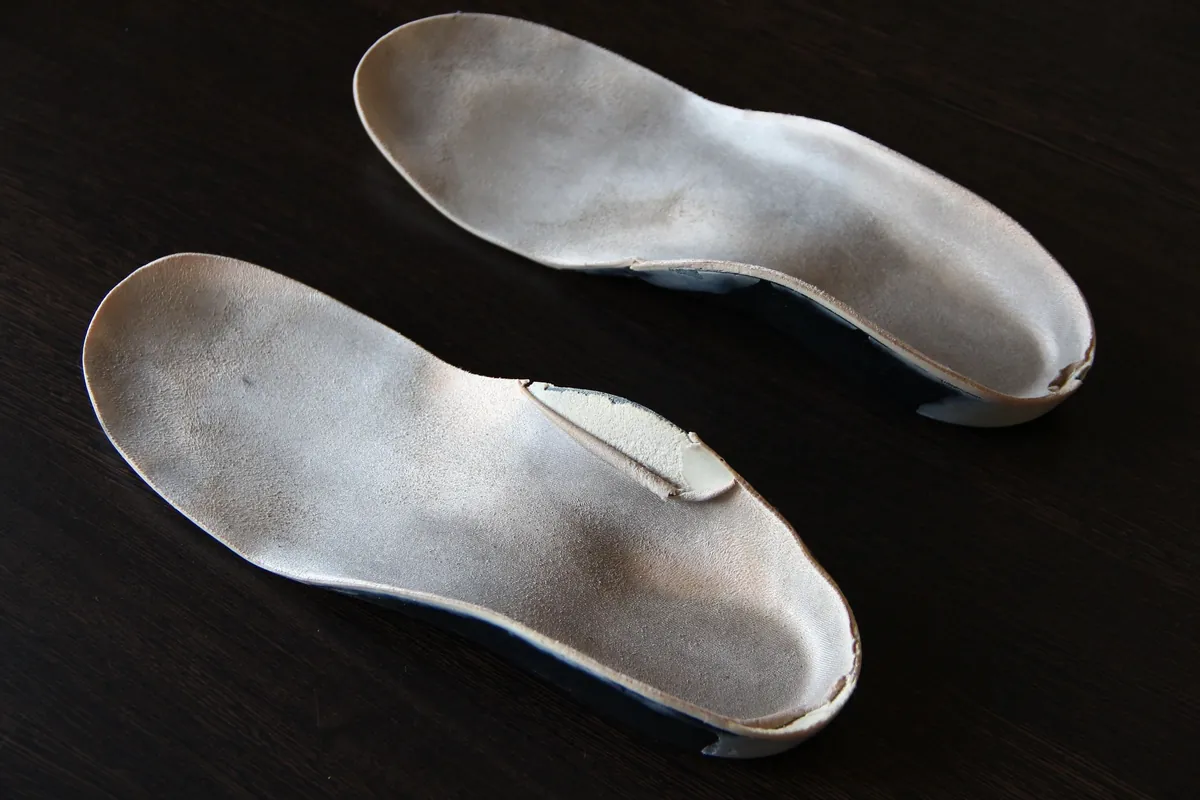
Insoles do not cure plantar fasciitis or Achilles tendinopathy. What they can do is change how pressure and motion are shared, so the painful tissue is not taking the same peak load on every step.
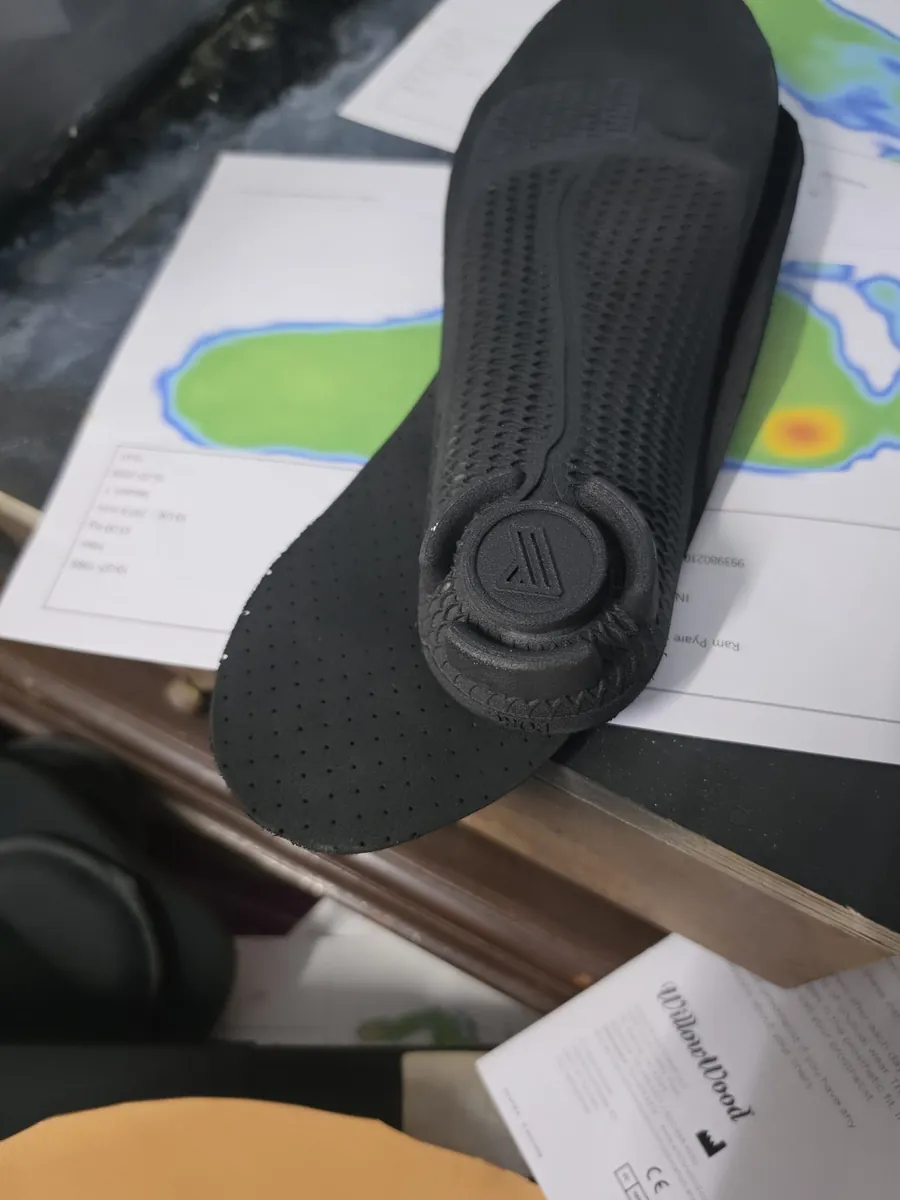
At P.O.R.C we start with a clinical examination and a Materialise Footscan. You walk across the pressure plate and the system shows where your heel is loaded most, and how your foot rolls. A foot scan is not a diagnosis, but it helps design the insole.
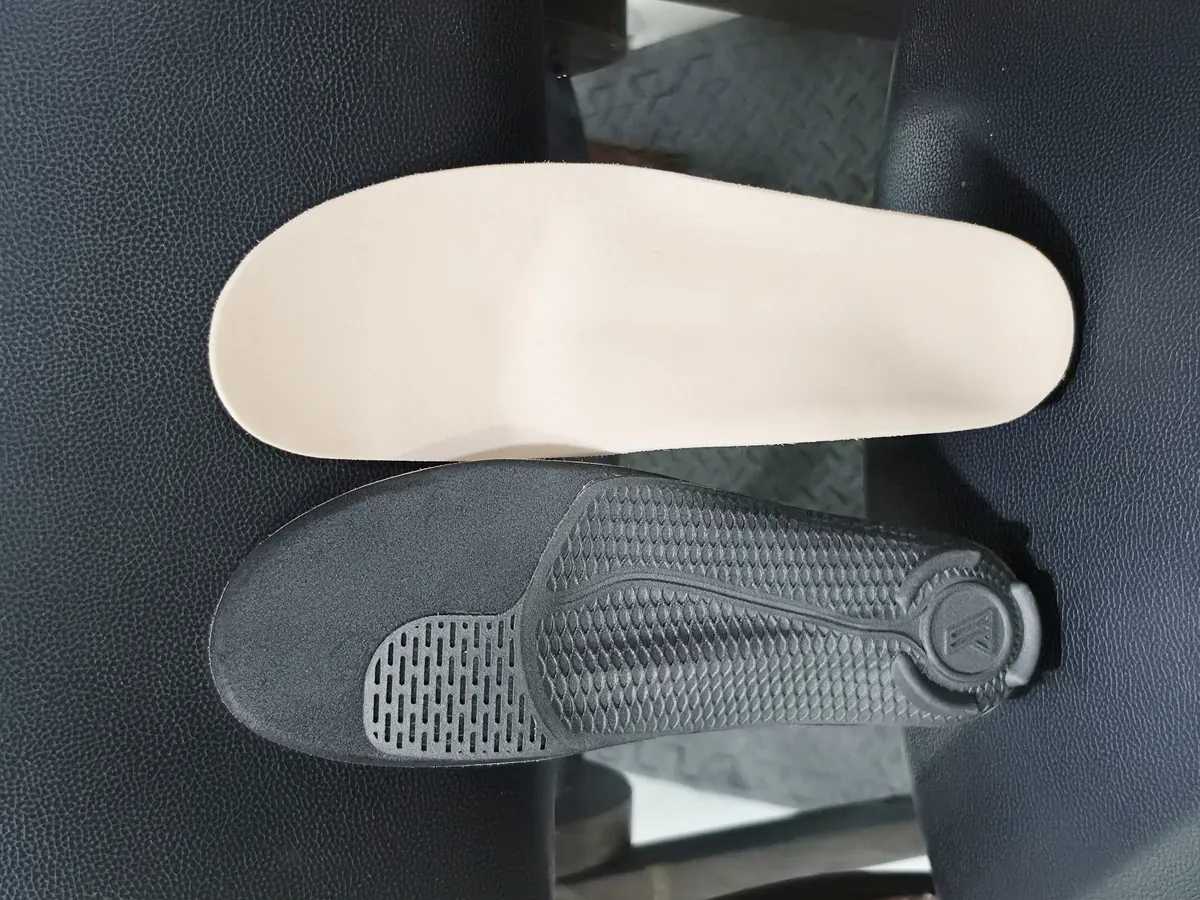
Typical PHITS 3D-printed insole features for heel pain include:
- Heel cup and cushioning to spread heel pressure; a PU heel pad can be added under the cover
- Heel offset (heel raise) of a few millimetres, which can reduce strain on the Achilles tendon and plantar fascia, provided the shoe still fits
- Arch (navicular) support so the arch does not collapse too quickly and stretch the fascia
- Heel wedges when the heel rolls markedly in or out
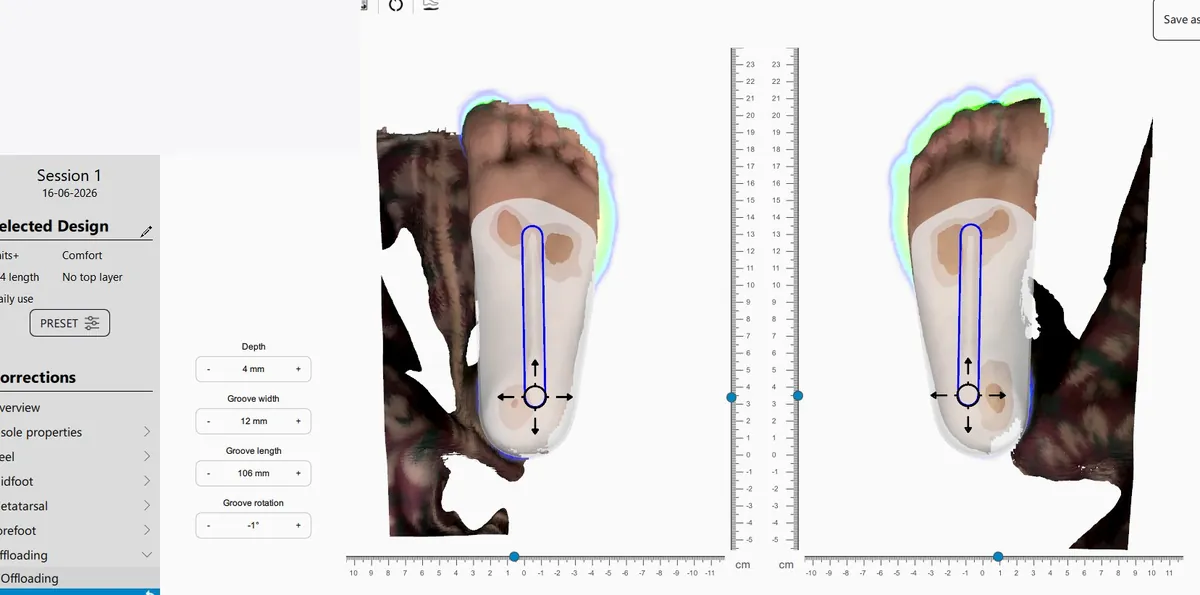
- For plantar fascia patterns, workshop modifications such as a fascia groove. Read how a Footscan guides plantar fasciitis insole modifications
What to expect
Wear the new insoles for short periods at first and build up. We review after a few weeks. Most people use insoles alongside stretching, strengthening and footwear changes; together, these give the best chance of steady improvement.
Please bring the shoes you walk and work in most. Related reading: plantar fasciitis, Footscan and PHITS 3D insoles · PHITS insole modifications.
Book an assessment in Delhi NCR
Footscan and PHITS custom insoles are made from our Safdarjung Enclave clinic. You can also start with a consultation at our hospital desks; please call to confirm timings.
- P.O.R.C Safdarjung Enclave: 42 Ground Floor, Street No. 1, Opp. Baba Balak Nath Mandir, Krishna Nagar, New Delhi 110029 (Monday to Saturday, 10am to 7pm)
- P.O.R.C at Apollo Hospital, Sarita Vihar
- P.O.R.C at BLK-Max Super Speciality Hospital, Pusa Road
Call 9810006111 or WhatsApp 9811706111. Serving patients in Delhi NCR since 1988.