
The collection appointment is more than picking up a pair of insoles. It is the moment to check how the device, your foot and your shoe work together before you begin using it in everyday life.
Bring the shoes that do the real work
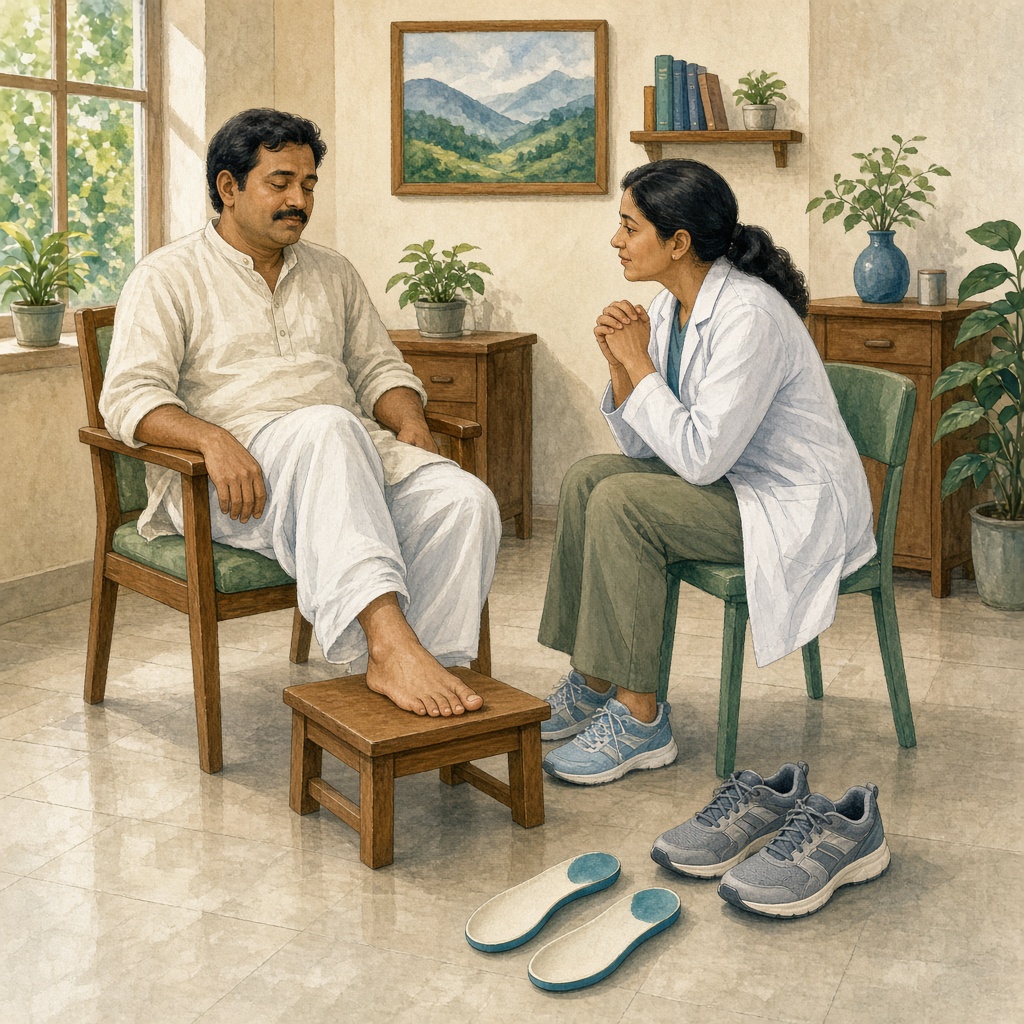
Bring the pair you wear most, along with relevant work or exercise footwear and your usual socks. Shoe size alone does not show available depth or width. Removable liners, a secure fastening and a stable heel can make fitting easier, but the clinician should check the actual shoe. Do not assume every dress shoe or slip-on can accommodate the same device. Tell the team which pair you need to wear for your main daily activity.
Look beyond the first comfortable step
At fitting, describe any focal pressure, heel lifting, toe crowding or sense that the shoe has become unstable. The orthotic should sit as intended, without rocking or folding. The clinician may compare how you stand and walk in the selected footwear. A firm support can feel different from a soft shop insert, but sharp pain or a strong rubbing point should not be dismissed as evidence that it is working. Ask for clarification before leaving.
Leave with a clear use plan
Understand whether the original shoe liner stays in or comes out, which shoe pair is approved and how to start wearing the device. Ask whom to contact about discomfort and when review should occur. Take a brief note of instructions rather than relying on memory. Never trim the structural shell or add padding yourself to solve a fitting concern. A fitting is a conversation, and specific feedback is more helpful than simply saying the insole feels unusual.
Where Footscan and PHITS fit at P.O.R.C
P.O.R.C — Prosthetic & Orthotic Rehabilitation Clinic — has been serving since 1988. For people exploring custom insoles in Delhi, the clinic uses Footscan and PHITS 3D-printed insoles as part of an individual assessment pathway. A scan is not a diagnosis. It can add loading information to the clinical picture, but it does not by itself establish that you need an orthotic or predict the result.
If you are considering 3D printed orthotics in South Delhi or elsewhere in Delhi NCR, start with the problem you want help with rather than requesting a particular contour. Your symptoms, medical history, examination, footwear and activities help determine the next step. The team may discuss a prescribed device, simpler support, footwear changes, rehabilitation or a medical referral. Outcomes vary, and no insole should be presented as a guaranteed cure.
Read about Footscan and custom insoles before your visit. For local access, see BLK-Max. P.O.R.C also has branch information for Safdarjung Enclave, Apollo Sarita Vihar and BLK-Max. Confirm the appointment location and service arrangements with the clinic; a branch page is not a promise of walk-in availability.
Short FAQ
Should I bring more than one shoe pair?
Yes, bring the pairs you hope to use so compatibility can be checked rather than assumed.
Can a Footscan explain every cause of foot pain?
No. Pressure information is one part of an assessment. Some symptoms need medical examination or other investigations before an orthotic is considered.
What should I bring to a review?
Bring the shoes and socks you actually use, your current inserts if any, relevant reports and a short account of your symptoms. Ask about the intended goal, alternatives, care instructions and follow-up before committing to a device.
This article is general education, not a diagnosis or personalised treatment advice. Seek prompt medical help for severe or sudden symptoms, a wound, or a hot swollen foot, especially with diabetes or reduced sensation.