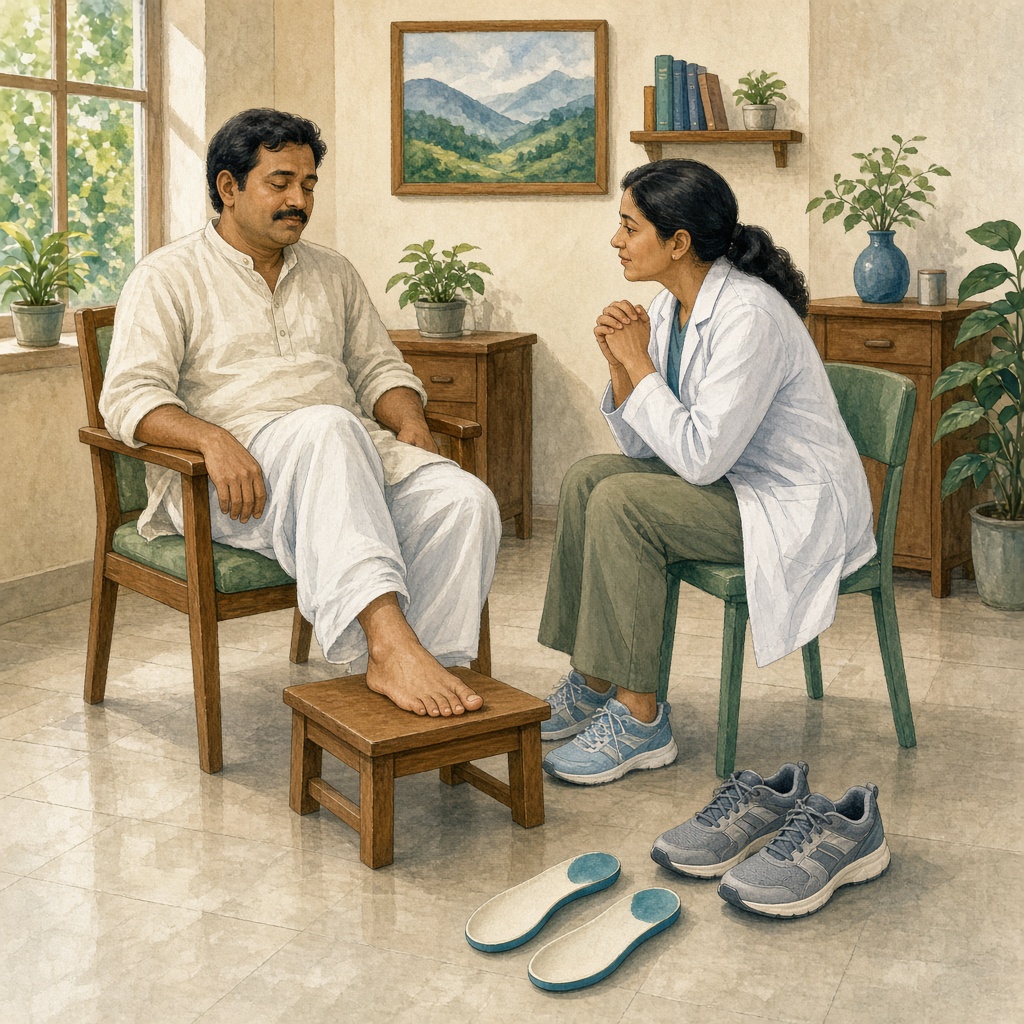
If you have reduced feeling in your feet, a comfortable shoe is not necessarily a safe shoe. Pressure or rubbing may go unnoticed, so an orthotic plan needs skin checks, suitable footwear and appropriate clinical follow-up.
Look instead of relying only on feeling
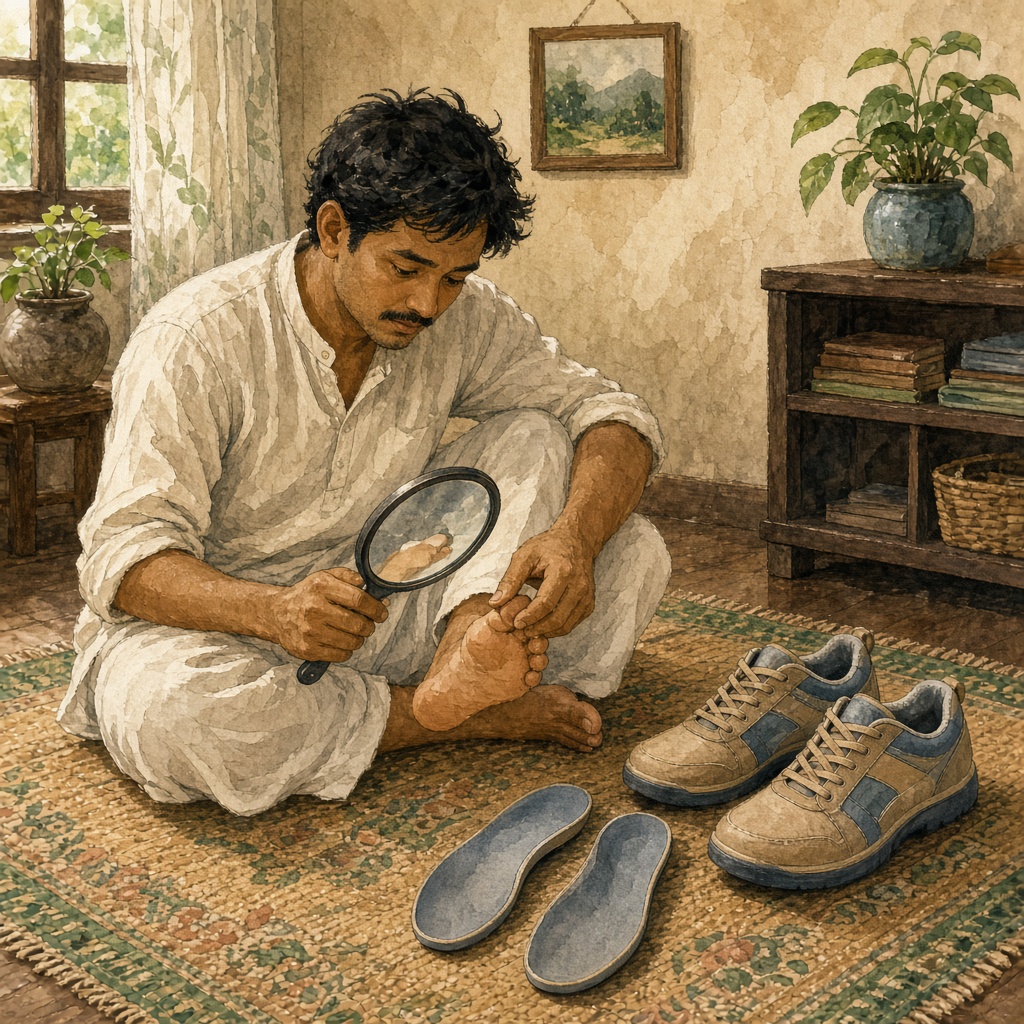
Check the tops, soles, heels and between the toes each day. A mirror or help from a trusted person may make this easier. Look for blisters, cuts, redness, swelling, colour changes or a new area of warmth. Check inside shoes for grit, folded liners or foreign objects before wearing them. Reduced sensation may arise for different reasons; its cause and your level of risk need medical assessment rather than assumptions based on an insole fitting.
Pressure information is not a full risk assessment
Footscan can contribute information about loading, but it does not replace a circulation check, sensory examination or wound assessment. A PHITS orthotic may be considered for selected needs, but a printed device is not automatically appropriate for every high-risk foot. A wound may need a specialist offloading strategy and urgent clinical care. Do not use ordinary custom insoles as a substitute for a diabetic-foot or wound-care plan.
Act early on changes
A new wound, hot swollen foot, spreading redness, discharge, a suddenly cold foot or a major colour change needs urgent medical advice. Do not wait for pain, because pain may be absent when sensation is reduced. Stop using a device that appears to be causing rubbing and contact the treating team promptly. Ask how to maintain safe mobility while the issue is assessed. This is a safety routine alongside medical care, not a guarantee that ulcers cannot occur.
Where Footscan and PHITS fit at P.O.R.C
P.O.R.C — Prosthetic & Orthotic Rehabilitation Clinic — has been serving since 1988. For people exploring custom insoles in Delhi, the clinic uses Footscan and PHITS 3D-printed insoles as part of an individual assessment pathway. A scan is not a diagnosis. It can add loading information to the clinical picture, but it does not by itself establish that you need an orthotic or predict the result.
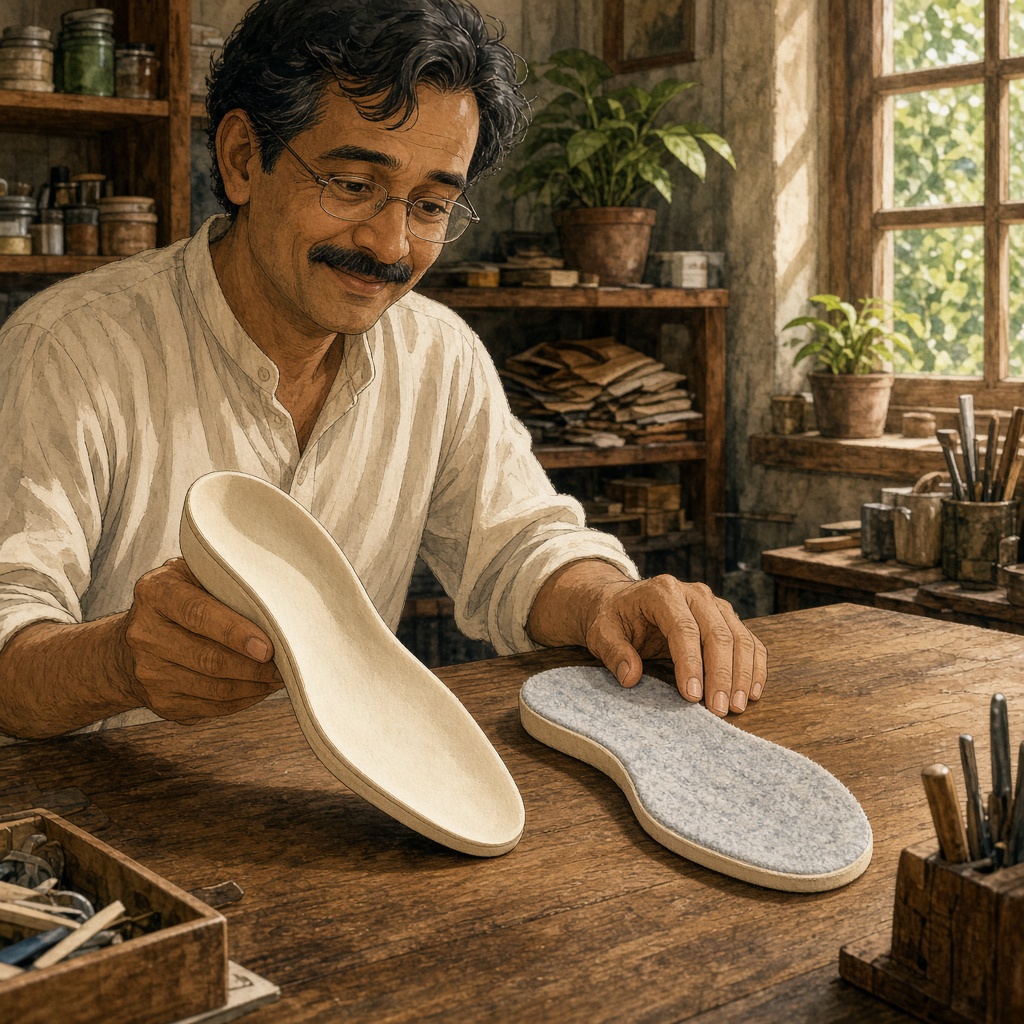
If you are considering 3D printed orthotics in South Delhi or elsewhere in Delhi NCR, start with the problem you want help with rather than requesting a particular contour. Your symptoms, medical history, examination, footwear and activities help determine the next step. The team may discuss a prescribed device, simpler support, footwear changes, rehabilitation or a medical referral. Outcomes vary, and no insole should be presented as a guaranteed cure.
Read about Footscan and custom insoles before your visit. For local access, see BLK-Max. P.O.R.C also has branch information for Safdarjung Enclave, Apollo Sarita Vihar and BLK-Max. Confirm the appointment location and service arrangements with the clinic; a branch page is not a promise of walk-in availability.
Short FAQ
If my insoles feel comfortable, can I skip skin checks?
No. Reduced sensation can hide injury, so follow your daily inspection and clinical review plan.
Can a Footscan explain every cause of foot pain?
No. Pressure information is one part of an assessment. Some symptoms need medical examination or other investigations before an orthotic is considered.
What should I bring to a review?
Bring the shoes and socks you actually use, your current inserts if any, relevant reports and a short account of your symptoms. Ask about the intended goal, alternatives, care instructions and follow-up before committing to a device.
This article is general education, not a diagnosis or personalised treatment advice. Seek prompt medical help for severe or sudden symptoms, a wound, or a hot swollen foot, especially with diabetes or reduced sensation.