P.O.R.C (Prosthetic and Orthotic Rehabilitation Clinic) has served mankind since 1988, delivering trusted, evidence-informed care for foot and lower-limb health. We specialise in custom orthotics and personalised strategies that improve comfort, alignment, and long-term mobility.
Proper footwear supports healthy movement and helps protect your joints. Well-fitting shoes that match your foot structure reduce strain on the plantar fascia, tendons, and joints while improving stability and shock absorption. Custom arch insoles add targeted support, guide alignment, and distribute pressure more evenly. With the right shoe-and-insole combination, many common foot problems can be prevented or managed more effectively.
Understanding your arch type
Most people fall into one of three arch types. Knowing yours helps you choose shoes and insoles that match how your foot loads and moves.
- Flat/low arch: often rolls inward more (overpronation), which can increase strain through the foot and lower limb.
- Normal arch: typically balances stability and flexibility, but still benefits from the right shoe structure and support.
- High arch: absorbs shock less efficiently and may concentrate pressure on the heel and forefoot.
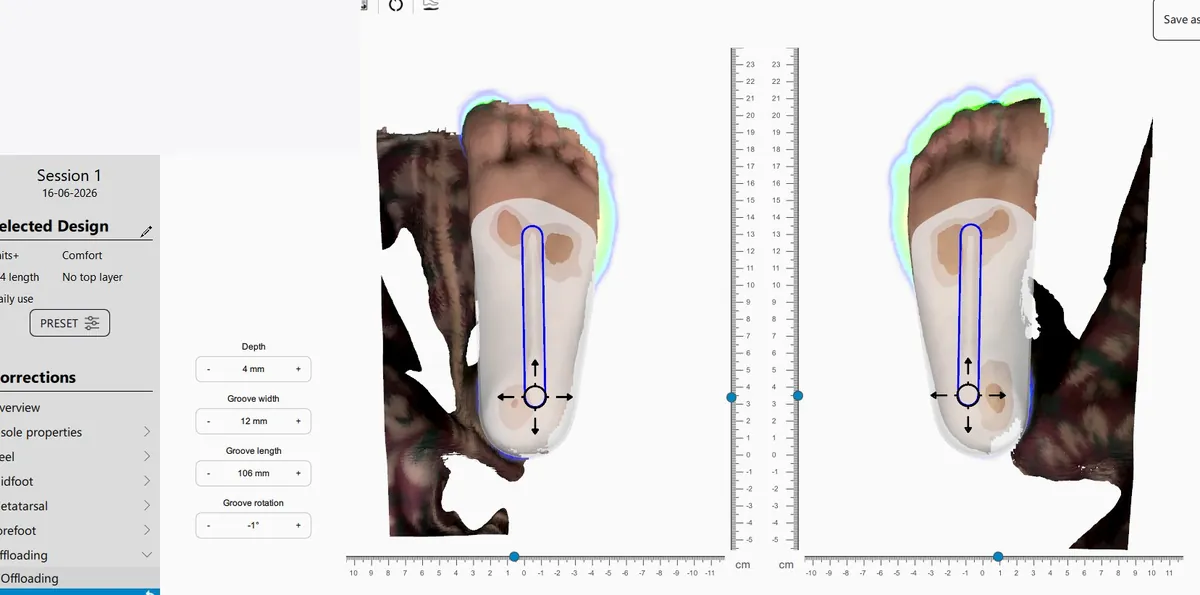
At P.O.R.C, we customise arch support to your foot structure using advanced foot scanning technology to guide precise insole design.
Common foot problems and solutions
Plantar fasciitis
Plantar fasciitis often causes sharp or aching pain in the heel and arch, especially with the first steps after rest. It is commonly driven by repetitive strain, poor shock absorption, or insufficient arch support.
- Shoe requirements: cushioned heel, supportive arch structure, and a firm midsole to limit excessive bending.
- How custom insoles help: contoured arch support and a stabilising heel cup to reduce plantar fascia strain and improve load distribution.
Flat feet (pes planus)
Flat feet occur when the arch is low or collapses during standing and walking. This can increase inward rolling and contribute to fatigue or pain in the feet, ankles, or knees, especially with prolonged activity.
- Shoe requirements: motion-control or stability design, structured midfoot support, and a wide toe box.
- How custom insoles help: medial arch support and controlled posting to improve alignment and reduce overpronation-related stress.
Metatarsalgia (1st and 4th metatarsal pain)
Metatarsalgia is pain and inflammation in the forefoot, often under the ball of the foot and sometimes focused at the 1st or 4th metatarsal heads. It is commonly aggravated by tight shoes, high-impact activity, or increased pressure from foot mechanics.
- Shoe requirements: wide toe box, adequate forefoot cushioning, and a rocker-style sole to reduce push-off loading.
- How custom insoles help: strategically placed metatarsal pads and offloading features to redistribute pressure away from painful metatarsal heads.
Heel pain
Heel pain can come from plantar fasciitis, fat-pad irritation, Achilles tendon overload, or repetitive impact. Identifying the source matters because support strategies differ by diagnosis.
- Shoe requirements: deep heel cup, effective cushioning, and strong shock absorption to reduce impact.
- How custom insoles help: heel posting, cushioning, and stabilisation to improve alignment and reduce painful heel loading.
Knee osteoarthritis (OA)
The foot and knee function as a connected chain, so foot alignment can change knee loading and walking mechanics. In knee OA, reducing stress on the affected knee compartment can improve comfort and daily function.
- Shoe requirements: stable base, supportive alignment, and cushioning to reduce impact while controlling motion.
- How custom insoles help: condition-specific lateral or medial wedging to redistribute load and support more efficient lower-limb biomechanics.
What makes custom arch insoles different?
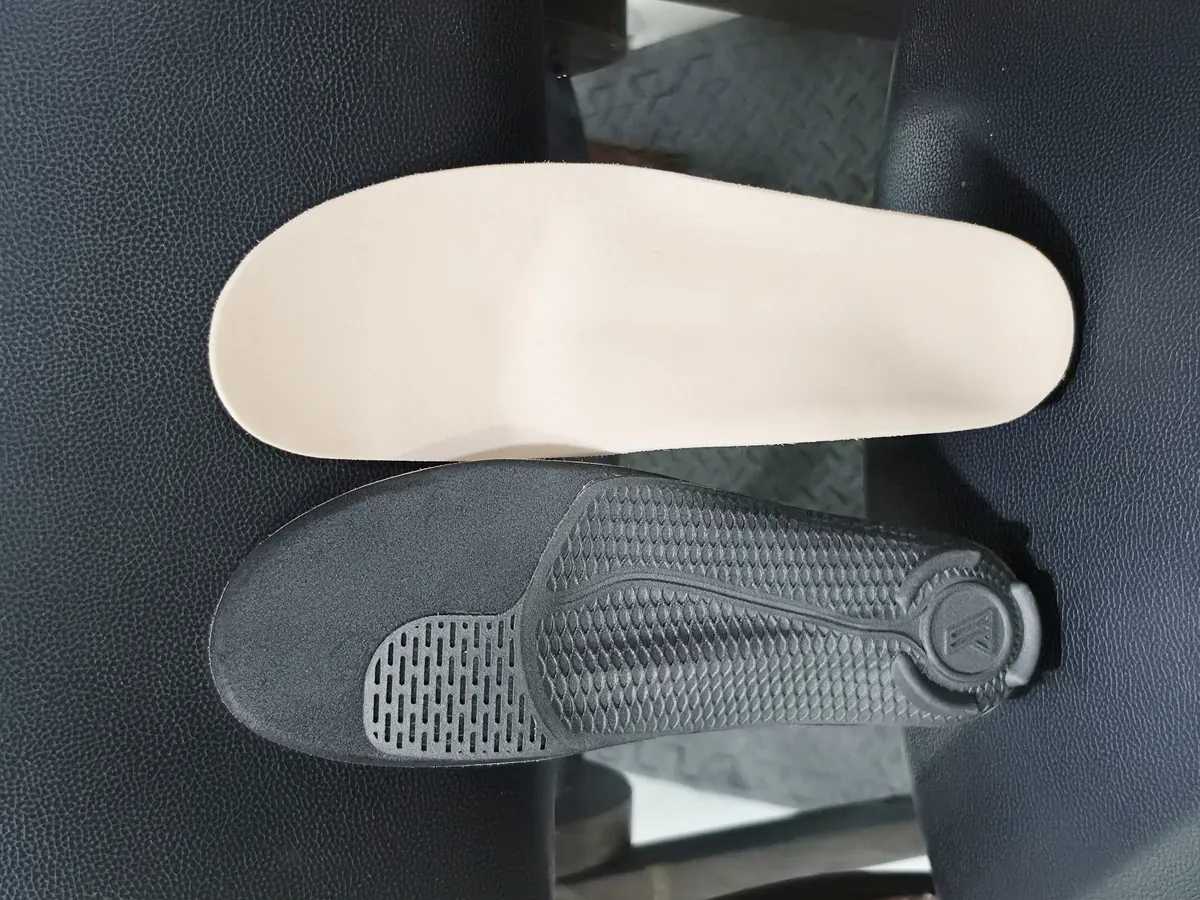
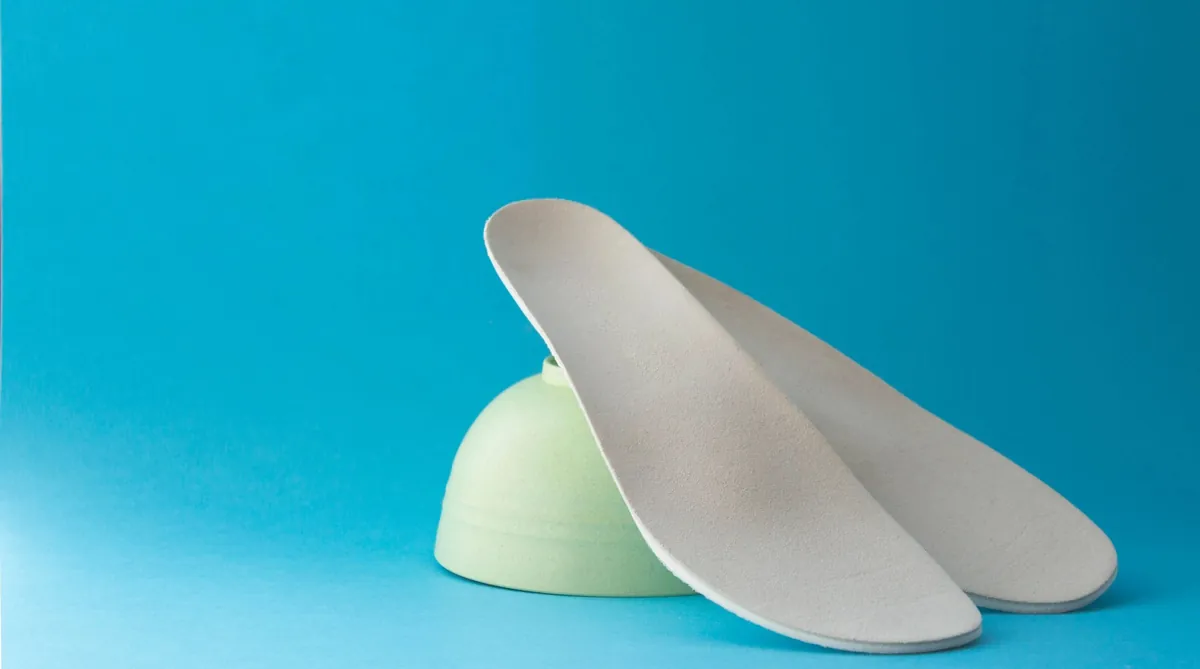
Custom arch insoles are built from precise measurements, often using 3D foot scans, to match your foot shape and functional needs. Unlike generic inserts, they are tuned to support specific structures, improve alignment, and manage pressure.
- Shell: the supportive base that controls motion and maintains shape.
- Accommodation layer: adds pressure relief where you need it most.
- Padding: targeted cushioning to offload sensitive areas.
- Top cover: improves comfort and wear resistance.
Materials may include EVA, Poron, and varied densities selected to balance stability, cushioning, and durability for your condition and activity level.
Key features to look for in shoes
- Adequate depth and width: prevents pressure points and allows natural toe splay.
- Removable insoles: makes room for custom orthotics without crowding.
- Firm heel counter: stabilises the rearfoot and limits unwanted motion.
- Flexible forefoot: supports efficient push-off while keeping the midfoot stable.
- Appropriate cushioning: matched to your weight, activity level, and pain pattern.
- Built-in arch structure: works with your orthotic design for consistent support.
- Quality materials and construction: maintains support and lasts longer.
Recommended shoes: premium and budget-friendly options
These two models are consistently recommended across multiple conditions, including plantar fasciitis, flat feet, metatarsalgia, heel pain, and knee osteoarthritis, because they combine reliable support with comfort-focused design. The picks below reflect patterns seen in 2026 clinical sources and expert reviews, especially around stability, cushioning, and load management.
| Feature | Premium option | Option |
|---|---|---|
| Model | New Balance 990v6 | Hoka Bondi 8 |
| Key features | High stability with excellent arch structure, deep heel counter for heel pain, proven support for plantar fasciitis and knee pain | Maximum cushioning with rocker sole that reduces forefoot load (ideal for metatarsalgia), strong clinical support for plantar fasciitis relief |
| Best for | Plantar fasciitis, flat feet, heel pain, knee OA | Plantar fasciitis, metatarsalgia, heel pain, general foot pain |
| Price range | ₹15,000–₹20,000 | ₹8,000–₹12,000 |
Shoe prices are approximate retail ranges and change often. P.O.R.C is not affiliated with these brands.
The P.O.R.C approach: advanced foot assessment
At P.O.R.C, we use advanced foot scanning to build accurate 3D models of your feet and capture key structural details. We assess biomechanics and analyse pressure distribution to see how you load your feet during standing and walking. We use this data to design custom insoles matched to your condition, footwear, and functional goals, so you get a precise, patient-specific solution that supports comfort, alignment, and long-term outcomes. A scan is not a diagnosis; it is combined with a clinical examination.
When to replace your insoles
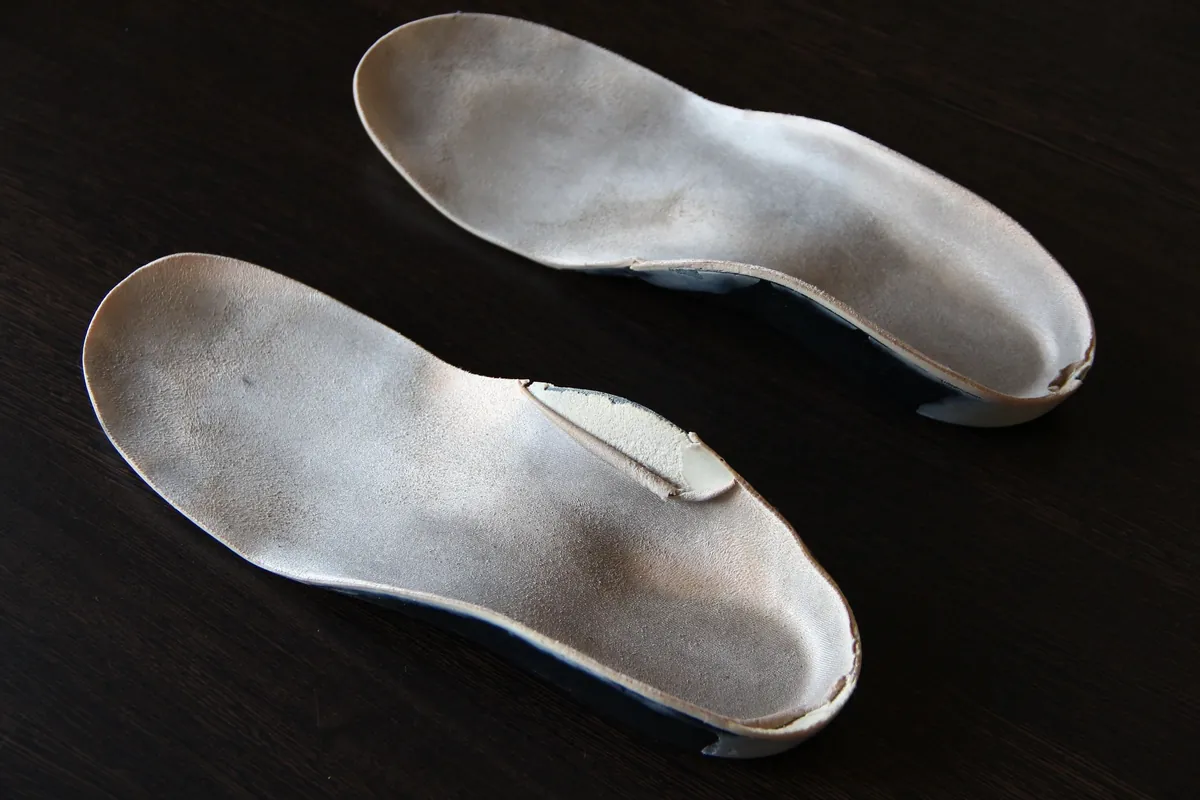
Plan to review and typically replace custom insoles every 12–18 months, depending on use, activity level, and materials. Replace sooner if you see visible wear, loss of shape, reduced support, or returning symptoms.
If you have persistent foot, heel, or knee discomfort, get assessed early to prevent problems from escalating. Visit P.O.R.C for a comprehensive evaluation, custom insole fabrication, and clear guidance on shoes that properly fit your orthotics and support your biomechanics.
Serving mankind since 1988, we focus on practical, patient-centred solutions that fit real life. Book your assessment today: call 9810006111 or WhatsApp 9811706111.